
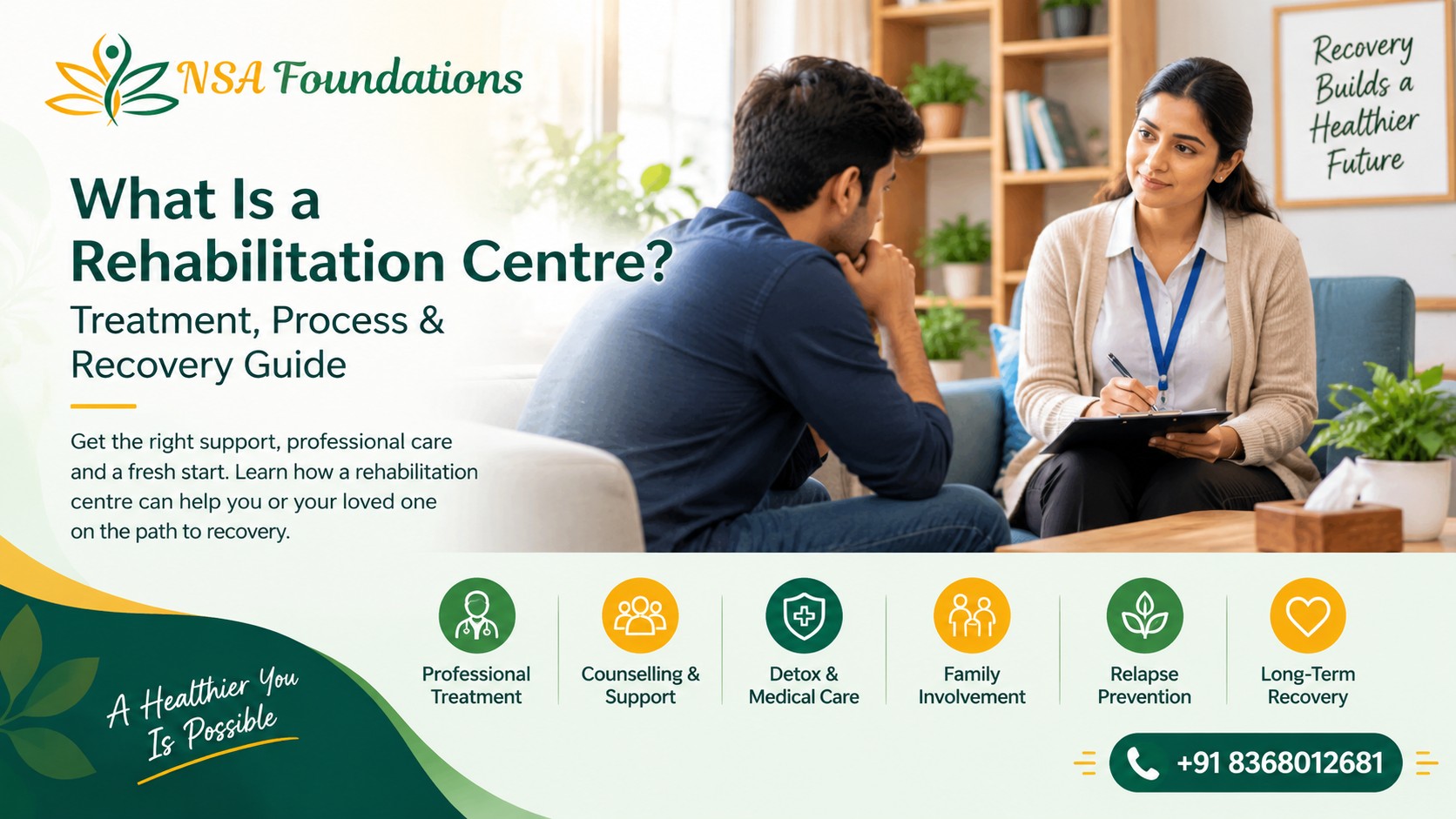
Choosing the right rehabilitation support can be an important step for a person struggling with substance use or addiction. Many families have questions about what happens during rehabilitation, how treatment works, how long recovery may take, and how to select an appropriate centre.
A rehabilitation centre provides a structured environment where individuals can receive professional support, counselling and recovery-focused care. Treatment is generally planned according to the person's needs, substance use history, physical health, psychological well-being and recovery goals.
What Is a Rehabilitation Centre?
A rehabilitation centre is a facility that provides structured support to people who are working toward recovery from substance dependence or other conditions requiring rehabilitation. Depending on the individual situation, care may involve assessment, medical supervision, counselling, behavioural interventions, family involvement, lifestyle support and relapse-prevention planning.
The purpose is not simply to stop substance use for a short period. Effective rehabilitation focuses on helping a person understand the factors connected with their substance use and develop healthier ways of managing triggers, emotions, relationships and everyday situations.
Also Read: Drug Addiction Treatment in Noida
Who May Need Rehabilitation Support?
Rehabilitation may be considered when substance use is affecting a person's health, relationships, work, education, finances or daily life.
Some situations in which professional help may be appropriate include:
- Repeated attempts to stop using a substance without success
- Increasing dependence on alcohol or drugs
- Strong cravings or difficulty controlling use
- Problems at home, work or school because of substance use
- Withdrawal symptoms after stopping or reducing use
- Continuing substance use despite physical, emotional or social problems
- Relapse after previous attempts at recovery
- Family members becoming increasingly concerned about the person's behaviour
A professional assessment can help determine what level and type of support may be appropriate.
Also Read: Top 10 Benefits of Choosing a Nasha Mukti Kendra in Noida
What Happens at a Rehabilitation Centre?
The exact programme differs between facilities and individuals, but rehabilitation commonly follows several stages.
1. Initial Assessment
Treatment generally begins with an assessment. Professionals may discuss the person's substance-use history, physical and mental health, previous treatment, family situation and recovery goals.
This information helps the treatment team understand the individual's needs and develop an appropriate plan.
2. Detoxification When Required
Some people may require detoxification before beginning or continuing rehabilitation. Detoxification is the process of allowing the body to eliminate a substance while withdrawal symptoms are monitored and managed.
Withdrawal can sometimes be medically serious, particularly with certain substances. Therefore, detoxification should be approached with appropriate professional or medical supervision rather than attempting to manage severe withdrawal alone.
3. Counselling and Behavioural Support
Counselling can help individuals understand patterns connected with substance use and work on healthier responses to difficult situations.
Sessions may address areas such as:
- Cravings and triggers
- Stress management
- Emotional regulation
- Relationship difficulties
- Decision-making
- Self-awareness
- Coping strategies
- Building a recovery-oriented routine
The approach can vary depending on the person's needs and the treatment programme.
4. Family Involvement
Addiction can affect the entire family. Family involvement can therefore be an important part of recovery.
Families may receive guidance about communication, boundaries, supportive behaviour and ways to avoid unintentionally encouraging harmful patterns.
How Long Does Rehabilitation Treatment Take?
There is no single treatment duration that is appropriate for everyone.
The length of rehabilitation can depend on factors such as:
- Type and severity of substance use
- Duration of dependence
- Physical and psychological needs
- Previous treatment history
- Response to treatment
- Risk of relapse
- Availability of family and social support
Some individuals may need a shorter period of structured support, while others may benefit from longer-term treatment and continuing aftercare.
Recovery should therefore be viewed as an ongoing process rather than a fixed number of days.
What Is the Difference Between Detox and Rehabilitation?
Detoxification and rehabilitation are related but different stages of care.
Detoxification primarily focuses on managing the physical process of stopping substance use and dealing with withdrawal.
Rehabilitation goes beyond the initial physical withdrawal stage. It focuses on behavioural, emotional, psychological and social aspects of recovery and helps a person develop strategies for maintaining long-term change.
How Does Counselling Help in Recovery?
Counselling provides an opportunity to discuss challenges in a structured and supportive environment.
Depending on the treatment plan, counselling may help a person:
- Identify situations that increase the risk of substance use
- Understand thoughts and behaviours associated with addiction
- Develop healthier coping mechanisms
- Improve communication
- Manage stress and emotional difficulties
- Prepare for situations that could trigger relapse
- Set realistic recovery goals
The objective is to develop practical skills that can continue to be used after structured treatment ends.
Why Is Family Support Important?
Recovery can be challenging when a person returns to the same environment, relationships or routines associated with previous substance use.
Family members can support recovery by maintaining healthy communication, encouraging professional treatment, avoiding enabling behaviour and understanding that recovery may involve setbacks.
At the same time, families also need appropriate boundaries. Supporting someone does not mean taking responsibility for every aspect of their recovery.
How Can Relapse Be Prevented?
Relapse prevention involves identifying potential risks before they become overwhelming.
A recovery plan may include:
- Recognising personal triggers
- Managing cravings
- Maintaining a healthy daily routine
- Staying connected with supportive people
- Continuing counselling or follow-up care when recommended
- Avoiding high-risk environments where possible
- Having a plan for dealing with difficult situations
- Seeking professional support when warning signs appear
A return to substance use should be treated as a signal that additional assessment or support may be needed, rather than as a reason to abandon recovery efforts.
How to Choose the Right Rehabilitation Centre?
Families often compare several facilities before making a decision. Instead of focusing only on advertisements or promises, consider practical factors such as:
Qualified Professional Support
Ask who provides treatment and what qualifications and experience the treatment team has.
Individualised Treatment
A person's recovery needs can differ significantly from another person's needs. Ask whether treatment is planned according to individual circumstances.
Safety and Medical Support
Find out what arrangements are available if someone develops significant withdrawal symptoms or another medical problem.
Counselling and Recovery Planning
Understand what counselling and behavioural support are included and how progress is reviewed.
Family Support
Ask whether families receive guidance and whether communication with family members is part of the treatment process where appropriate.
Aftercare
Recovery does not necessarily end when residential treatment finishes. Ask what follow-up or aftercare support is available.
Transparency
Families should receive clear information about the treatment programme, facilities, rules, costs and expected services before making a decision.
Rehabilitation Support in Noida and Delhi NCR
Families looking for professional recovery support may compare local facilities based on treatment approach, professional support, safety arrangements, counselling services and aftercare.
For people specifically searching for a rehab centre in Noida, it is useful to understand the treatment programme and support available before admission rather than selecting a facility based only on its location.
Those searching for a nasha mukti kendra in Noida should also ask about the qualifications of the treatment team, the role of counselling, medical support during withdrawal when required, family involvement and the centre's approach to long-term recovery.
For families considering a rehabilitation centre in Delhi NCR, comparing the treatment approach, facilities, professional support, recovery planning and aftercare can help them make a more informed choice.
What Happens After Rehabilitation?
Leaving residential treatment is not necessarily the end of recovery. Returning to normal life can bring new challenges, including exposure to old routines, stressful situations or social environments connected with previous substance use.
Aftercare may involve continued counselling, follow-up appointments, peer support, family involvement, healthy lifestyle changes and a personalised relapse-prevention plan.
The appropriate form of aftercare depends on the individual's circumstances and treatment needs.
Frequently Asked Questions (FAQs)
Is rehabilitation only for people with severe addiction?
No. The appropriate level of support depends on the individual's needs, substance-use pattern, health and circumstances. A professional assessment can help determine whether rehabilitation or another form of treatment is appropriate.
Can a person recover without rehabilitation?
Some people may recover with outpatient treatment, counselling, medical care or community-based support, while others may require structured residential treatment. The appropriate option varies from person to person.
How can I convince a family member to seek help?
Trying to force or shame someone into treatment can make communication more difficult. A calm conversation, clear concern about specific behaviours and encouragement to speak with a qualified professional may be more constructive.
Is relapse possible after rehabilitation?
Yes. Addiction recovery can involve challenges and, for some people, relapse. Continuing support and a clear relapse-prevention plan can help address warning signs and reduce risks.
Does rehabilitation guarantee recovery?
No treatment can guarantee a particular outcome. Recovery can depend on many factors, including the individual's condition, participation in treatment, support system, ongoing care and ability to maintain recovery strategies.
What should families ask before admission?
Families can ask about the treatment approach, professional qualifications, medical support, counselling, accommodation, programme duration, family involvement, costs, rules, emergency procedures and aftercare arrangements.
Conclusion
Rehabilitation is more than simply stopping substance use. It is a structured process that can help individuals address the physical, behavioural, emotional and social aspects associated with addiction while developing practical skills for continued recovery.
For families, understanding the treatment process, asking the right questions and looking beyond short-term promises can make the decision-making process clearer. Professional assessment is an important starting point because treatment should be based on the individual's needs rather than a one-size-fits-all approach.
NSA Foundations focuses on providing structured recovery support with an emphasis on counselling, personalised care, family involvement and continued recovery planning. Anyone considering treatment should discuss their individual circumstances with qualified professionals to understand which type of support may be appropriate.
Centre: NSA Foundations (Join Today Best Nasha Mukti Kendra | De Addiction Centre | Rehabilitation Centre)
Phone: +91 8368012681
Address: RP 18, Sector 132, Noida
Website: https://nsafoundations.com/
Google Maps: Find us on Google Maps